
We are looking for new graduate students and postdoctoral fellows who would like to join our team. These positions will be funded by two new 5-year R01’s. Please contact Paula if you are interested!
Author: pwatnick
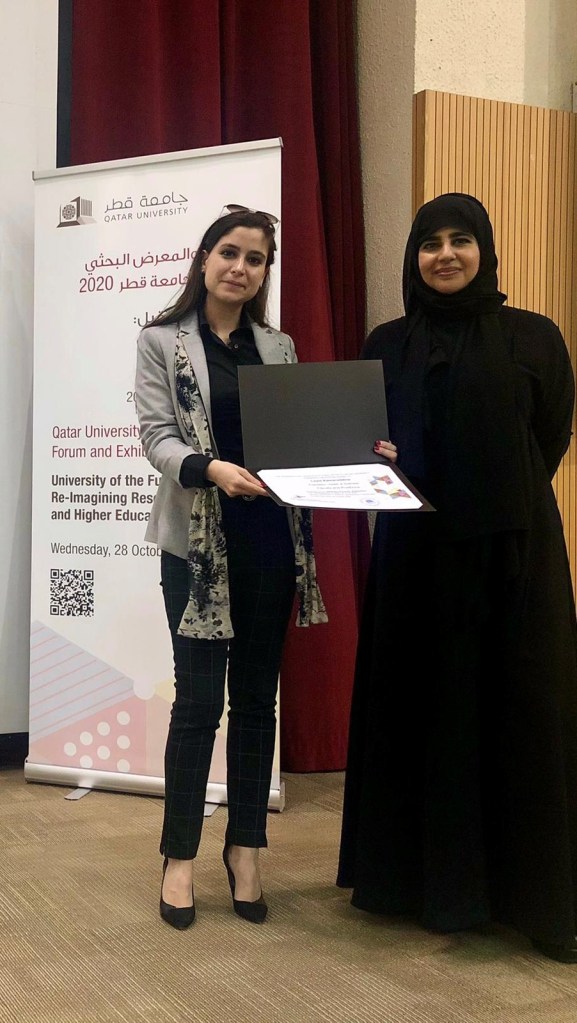
Congratulations Layla!!! Asst Prof Layla Kamareddine (a recent graduate of the lab) wins first prize for her poster: Between Immunity, Metabolism, and Development: A story of a Fly Gut! at the Annual Research Forum & Exhibition November, 2020; Doha, Qatar
Congratulations Layla!!! Former Watnick lab postdoc and current Assistant Professor at Qatar University, Dr. Layla Kamareddine wins first prize in for her poster: Between Immunity, Metabolism, and Development: A story of a Fly Gut! at the Annual Research Forum & Exhibition November, 2020; Doha, Qatar.
Fernanda Pace’s review on sex steroids, the intestinal innate immune response, and the microbiota is available on line!


Fernanda reviews the complex interaction between sex steroids, the innate immune response, and the microbiota in the mammalian intestine! DOI: 10.1016/j.tim.2020.11.001
Audrey Vanhove’s last publication from our lab with help from Bat-Erdene Jugder and Daniela Barraza-out during quarantine!
Methionine availability in the arthropod intestine is elucidated through identification of Vibrio cholerae methionine acquisition systems.
An approach to understanding conditions in the host intestine by defining pathogen nutrient uptake systems.
Audrey S. Vanhove, Bat-Erdene Jugder, Daniela Barraza, and Paula I. Watnick
DOI: 10.1128/AEM.00371-20
Our lab is officially closed down for the epidemic 3/16/2020
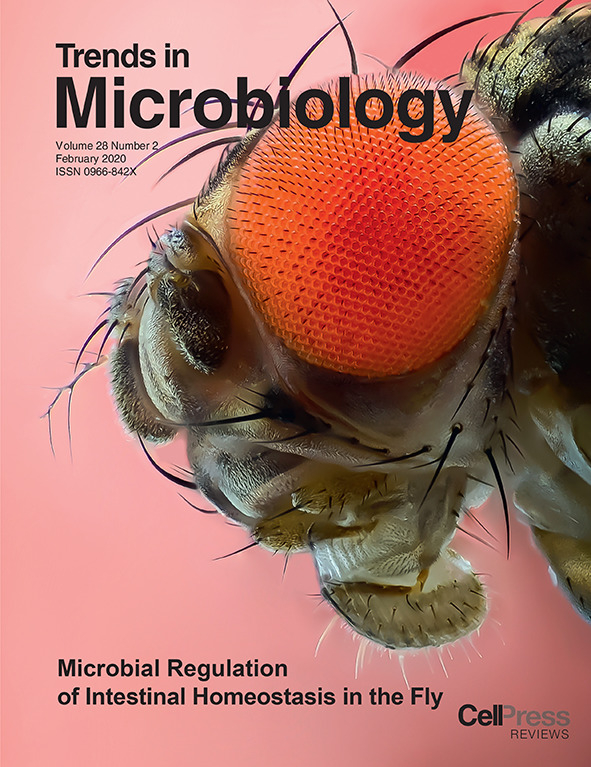
A new review in Trends in Microbiology by Paula and Bat-Erdene Jugder: “Microbial control of Intestinal Homeostasis via Enteroendocrine Cell Innate Immune Signaling”
We welcome Daniela Barraza, a new graduate student in the lab!
Removal of a Membrane Anchor Reveals the Opposing Regulatory Functions of Vibrio cholerae Glucose-Specific Enzyme IIA in Biofilms and the Mammalian Intestine, Vijayakumar et al
The phosphoenolpyruvate phosphotransferase system (PTS) is a phosphotransfer cascade that regulates bacterial metabolism, behavior, and the transport of many sugars. Glucose-specific enzyme IIA (EllAGlc) is component of the PTS that carries out phosphotransfer and regulates both membrane-associated and cytoplasmic partners through direct protein-protein interactions. Here Vijayakumar et al identify an amphipathic helix at the N-terminus of Vibrio cholerae EIIAGlc that enables this protein to associate with the inner membrane. This amphipathic helix is essential for EIIAGlc regulation of membrane-associated partners, and Dr. Vijayakumar shows that unrelated amphipathic helices can rescue function. Removal of this amphipathic helix uncouples phosphotransfer through the PTS from sugar transport. Finally, Dr. Vijayakumar shows that EIIAGlc regulates opposing cytoplasmic and membrane-associated regulators of biofilm formation and bacterial metabolism in the mammalian intestine whose activities may be studied in isolation by removal of the amphipathic helix.
https://mbio.asm.org/content/9/5/e00858-18.long
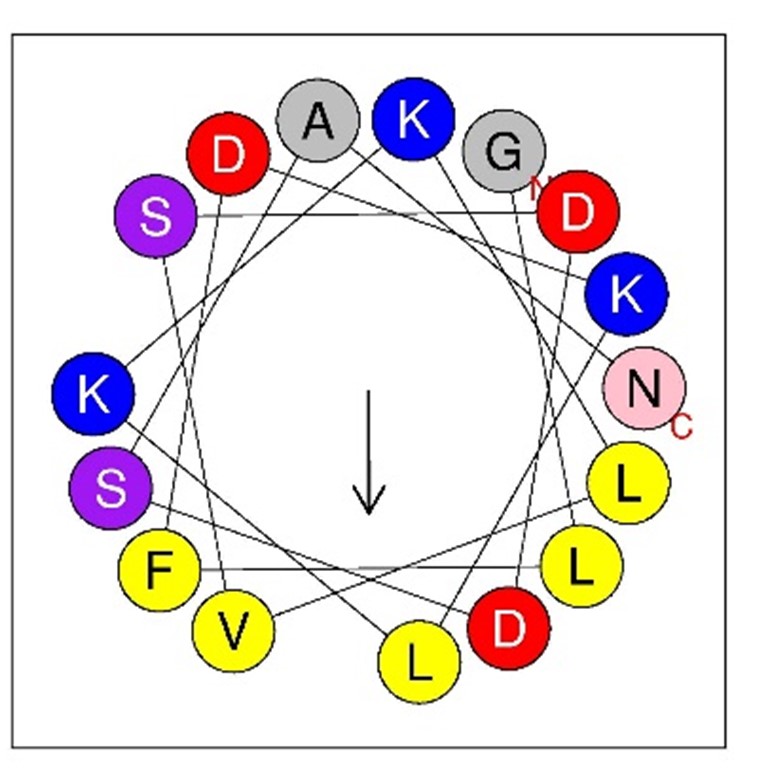
- The EIIAGlc amphipathic helix
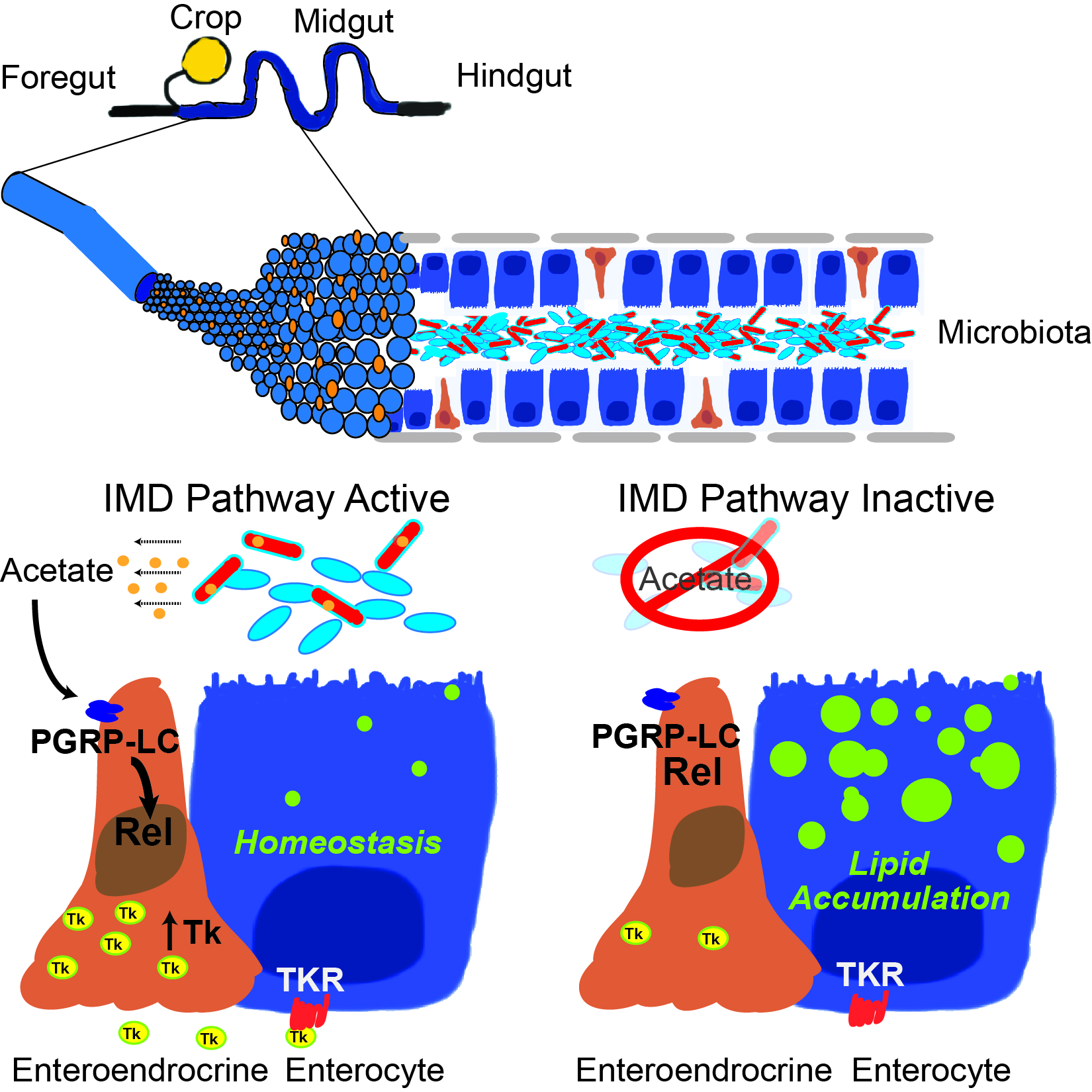
The Drosophila immune deficiency pathway modulates enteroendocrine function and host metabolism, Kamareddine et al
In this manuscript, we show that a TNF-like innate immune pathway expressed in enteroendocrine cells is co-opted by commensal bacteria in the intestine to activate expression of enteroendocrine peptides. For a further description of the work, see the BCH vector blog. Manuscript link
Sublingual Adjuvant Delivery by a Live Attenuated Vibrio cholerae-Based Antigen Presentation Platform, Liao et al
In this publication, we show that our sublingual vaccine platform can be engineered to constitutively synthesize the attenuated cholera toxin-based adjuvant mmCT in situ leading to boosting of the mucosal immune response.
 Paula Watnick's Lab
You must be logged in to post a comment.