
Author: pwatnick
Our lab jackets arrive!


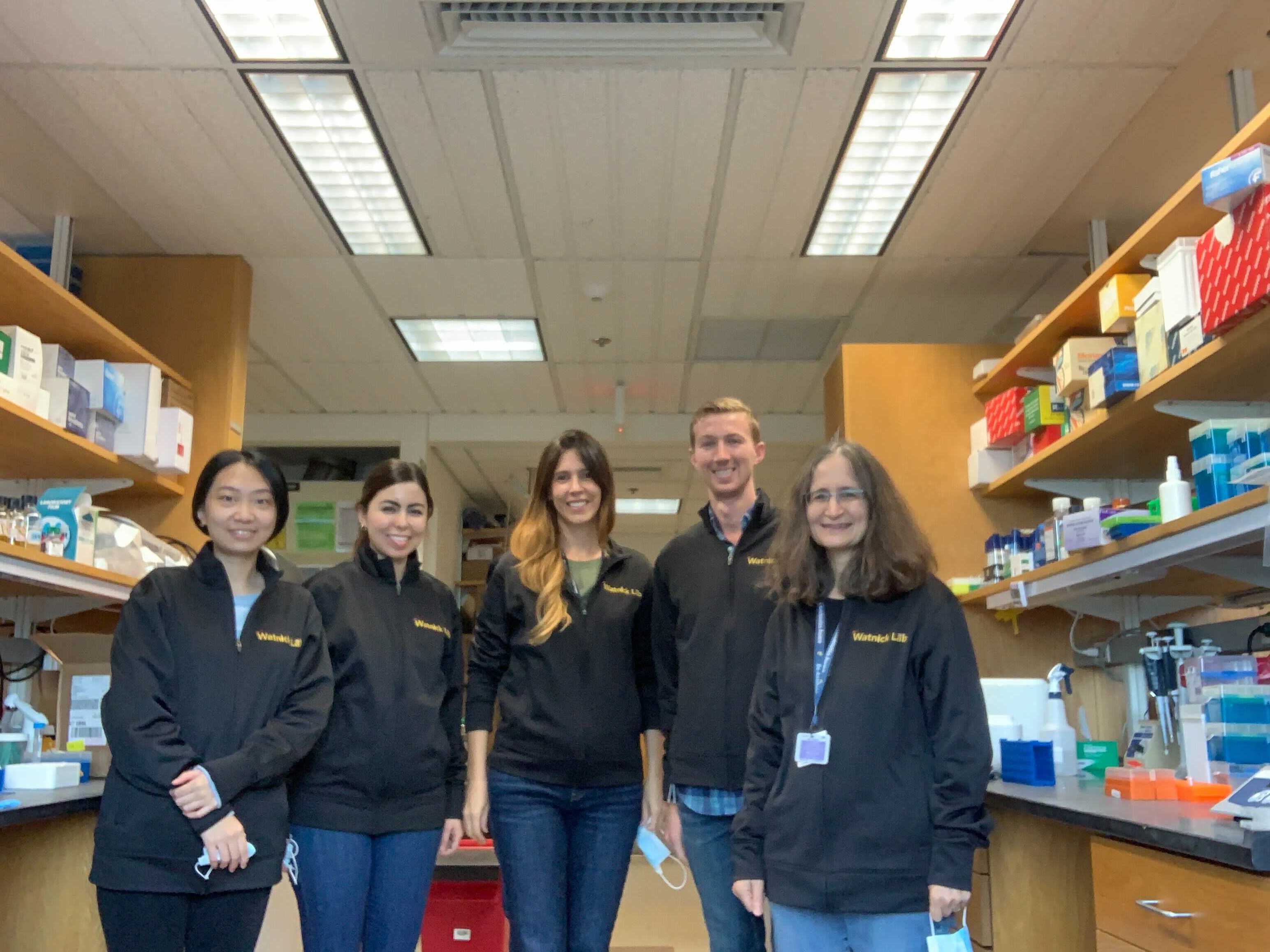
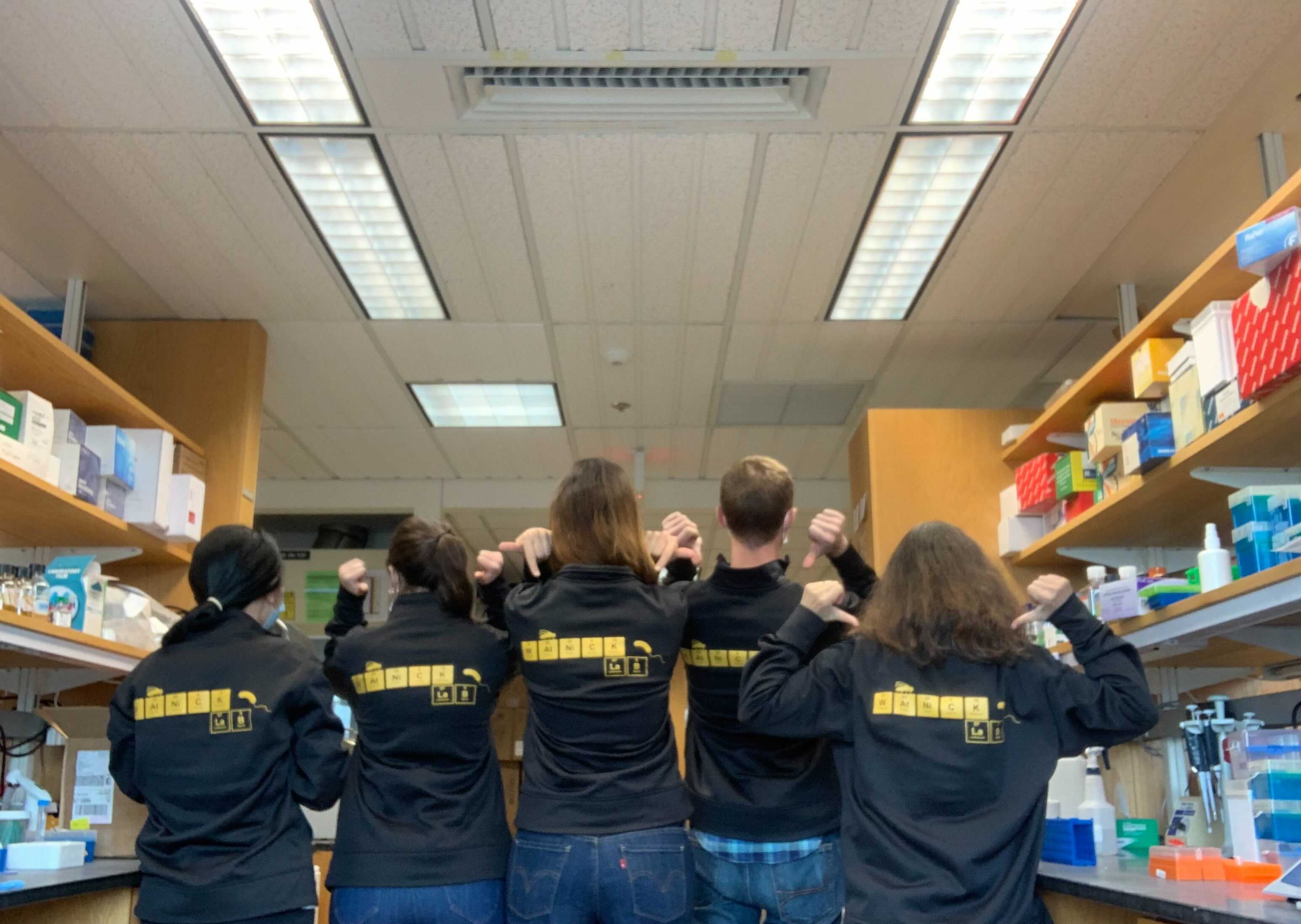
Fernanda Pace’s paper on short chain fatty acids and intestinal inflammation is out in Microbiology Spectrum! Congratulations Fernanda!!
Rita Wang joins our lab as a masters student! Welcome Rita!
Bat-erdene Jugder’s work is available on line in Immunity!

Bat, who collaborated with Layla Kamareddine early on, shows that acetate produced by the microbiota enters the cell through an acetate transporter he named Tarag. From there it is converted to acetyl-CoA and used by the histone acetyltransferase Tip60 complex to acetylate histone 2Av, which activates transcription of ecdysone-induced genes including the peptidoglycan receptor PGRP-LC. He proposes that the increase in PGRP-LC transcription potentiates innate immune signaling in the intestine. This leads to increased antimicrobial peptide expression and increased expression of tachykinin, an inhibitor of lipid synthesis in the gut. This provides a template for how microbiota might influence the innate immune response of the intestinal epithelium.
Here is a link to his paper:
Graduate student and postdoctoral positions available!
We are looking for new graduate students and postdoctoral fellows who would like to join our team. These positions will be funded by two new 5-year R01’s. Please contact Paula if you are interested!
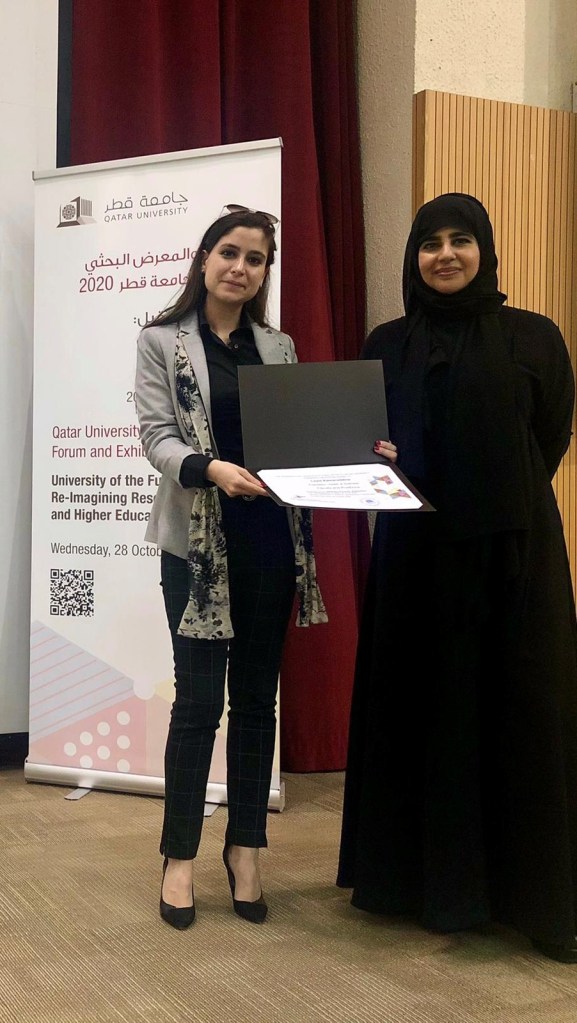
Congratulations Layla!!! Asst Prof Layla Kamareddine (a recent graduate of the lab) wins first prize for her poster: Between Immunity, Metabolism, and Development: A story of a Fly Gut! at the Annual Research Forum & Exhibition November, 2020; Doha, Qatar
Congratulations Layla!!! Former Watnick lab postdoc and current Assistant Professor at Qatar University, Dr. Layla Kamareddine wins first prize in for her poster: Between Immunity, Metabolism, and Development: A story of a Fly Gut! at the Annual Research Forum & Exhibition November, 2020; Doha, Qatar.
Fernanda Pace’s review on sex steroids, the intestinal innate immune response, and the microbiota is available on line!


Fernanda reviews the complex interaction between sex steroids, the innate immune response, and the microbiota in the mammalian intestine! DOI: 10.1016/j.tim.2020.11.001
Audrey Vanhove’s last publication from our lab with help from Bat-Erdene Jugder and Daniela Barraza-out during quarantine!
Methionine availability in the arthropod intestine is elucidated through identification of Vibrio cholerae methionine acquisition systems.
An approach to understanding conditions in the host intestine by defining pathogen nutrient uptake systems.
Audrey S. Vanhove, Bat-Erdene Jugder, Daniela Barraza, and Paula I. Watnick
DOI: 10.1128/AEM.00371-20


You must be logged in to post a comment.